 info@rkgindustries.com
  +91-7419008652, +91-9355108652
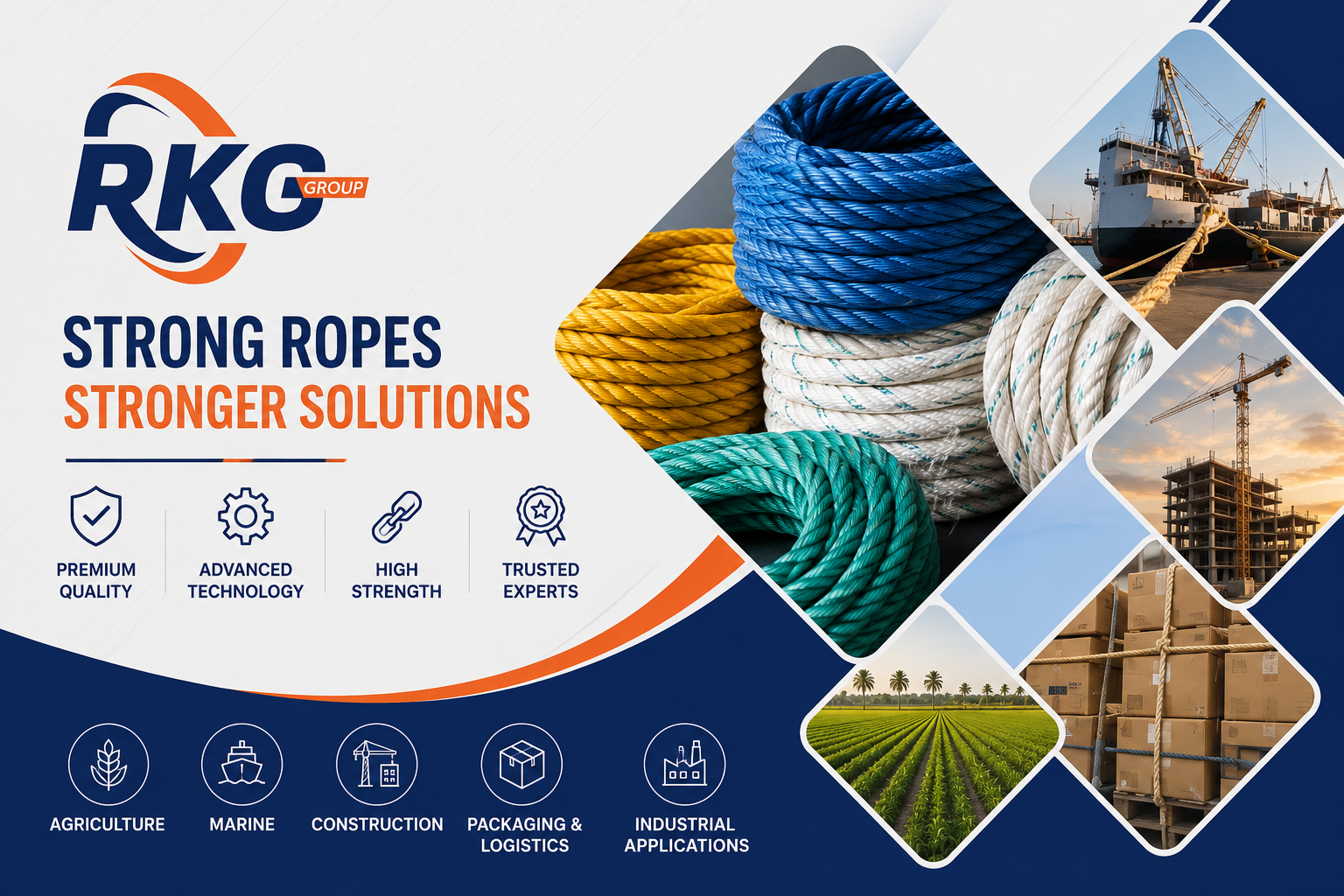
Ropes are an important part of our daily lives and industries. Ropes are used in agriculture, construction, logistics, packaging, transportation, and more. Not all ropes are made the same; the quality of the rope depends on the raw material, the processing, and the expertise of the manufacturer.
India has become one of the leading producers of industrial ropes, supplying high-quality products to both domestic and international markets. If you’re looking for reliable rope manufacturers in India, understanding how ropes are made can help you make an informed purchasing decision.
RKG Industries manufactures premium-quality ropes and threads, meeting the diverse needs of industries across India and beyond. In this blog, we’ll discuss rope manufacturing, from raw materials to production techniques and industrial applications.
What is Rope Manufacturing?
Rope-making is a process in which high-strength fibers are twisted, braided, or interwoven into durable ropes. The goal is to create ropes that offer excellent tensile strength, flexibility, abrasion resistance, and long-lasting performance under various operating conditions.
Modern rope-making combines advanced machinery with rigorous quality control to ensure that each rope performs reliably even in harsh environments.
Raw Materials Used in Rope Manufacturing
The quality of the raw materials is crucial to the production of any rope. Different industries require different rope qualities. Therefore, rope manufacturers use different synthetic and natural fibers.
1. Polypropylene (PP)
Polypropylene is widely used in industrial ropes. Its characteristics include its light weight, water buoyancy, and moisture repellency. PP ropes are widely used in agriculture, packaging, marine, fishing, and general industrial applications.
2. High-Density Polyethylene (HDPE)
High-Density Polyethylene (HDPE) ropes are characterized by excellent durability and perform well even in harsh weather. These ropes are commonly used in construction, fishing, and outdoor activities.
3. Nylon
Nylon ropes provide excellent strength and elasticity. They are capable of handling heavy loads and absorbing shock, making them ideal for lifting, towing, marine operations, and industrial use.
4. Polyester
Polyester ropes are highly resistant to sunlight, abrasion, and chemicals. They maintain their strength even when exposed to moisture, making them suitable for marine and outdoor applications.
Rope Manufacturing Process
Producing high-quality ropes requires precision at every stage. Here’s how the manufacturing process works.
1. Raw Material Selection
The first step involves selecting premium-quality fibers based on the intended application. High-quality raw materials ensure better durability and consistent performance.
2. Yarn Production
The selected fibers are converted into yarn using specialized extrusion and twisting machines. The quality of the yarn directly influences the strength of the finished rope.
3. Twisting and Stranding
Individual yarns are twisted together to form strands. Multiple strands are then combined to create ropes with the desired diameter and strength.
4. Rope Formation
Depending on customer requirements, ropes are manufactured using twisting or braiding techniques. Modern automated machines ensure uniform construction and consistent quality.
5. Quality Inspection
Every batch undergoes strict quality checks for tensile strength, diameter consistency, flexibility, elongation, and overall durability. Only products that meet quality standards are approved for dispatch.
Applications of Industrial Ropes
Industrial ropes are used across numerous sectors because of their versatility and strength.
Agriculture
Farmers use ropes for crop support, bundling, fencing, irrigation systems, and livestock management.
Marine Industry
Marine ropes are designed to withstand moisture, saltwater, and harsh weather conditions. They are used for docking, anchoring, fishing, and shipping operations.
Construction
Construction companies rely on heavy-duty ropes for lifting materials, securing equipment, and ensuring workplace safety.
Packaging and Logistics
Strong ropes help secure cargo during storage and transportation, reducing the risk of damage.
Industrial Manufacturing
Factories use industrial ropes in machinery, material handling, warehousing, and various production processes.
Why Quality Matters
Choosing high-quality ropes isn’t just about durability—it directly impacts safety and operational efficiency. Poor-quality ropes can wear out quickly, increasing maintenance costs and the risk of accidents.
Reliable rope manufacturers in India invest in premium raw materials, advanced production technology, and rigorous testing to deliver products that meet industry standards.
How to Choose the Right Rope Manufacturer
Selecting the right manufacturing partner is just as important as choosing the right rope. Consider the following factors before placing a bulk order:
- Experience in rope and yarn manufacturing
- High-quality raw materials
- Modern manufacturing facilities
- Consistent product quality
- Custom manufacturing capabilities
- Timely delivery
- Strong customer support
- Competitive pricing
A trusted manufacturer will always provide products that meet your business requirements without compromising on quality.
Why Choose RKG Industries?
When it comes to the top rope manufacturing companies in India, RKG Industries is among the top companies because it manufactures high-quality ropes and believes in fully satisfying its customers. With over 20 years of experience, RKG Industries uses modern technology to manufacture ropes.
Our strengths include:
1. Our company uses premium-quality raw materials to manufacture ropes.
2. Modern technology is used to manufacture ropes.
3. Ropes are manufactured by experienced and skilled craftsmen.
4. RKG Industries ensures timely delivery of its ropes throughout India.
5. Customer satisfaction is RKG Industries’ primary goal.
If you are also looking for rope manufacturers for your farm, packaging, construction, marine or industrial use then RKG Industries is committed to provide you with the best quality ropes.
Conclusion
The effectiveness of a rope depends on the raw materials used, the rope manufacturing process, and the expertise of the manufacturer. Knowing these things will help you purchase the best quality rope. This will help you choose products that will last and meet your needs.
RKG Industries is a trusted rope manufacturing company in India, manufacturing top-quality ropes using high-quality threads and by experienced and skilled workers. If you are a wholesaler of ropes, RKG Industries could be an excellent choice.
Frequently Asked Questions
1. What materials are commonly used in rope manufacturing?
The most common materials include polypropylene (PP), HDPE, nylon, polyester, and other specialized synthetic fibers, depending on the application.
2. Which industries use industrial ropes?
Industrial ropes are widely used in agriculture, construction, marine, logistics, packaging, manufacturing, transportation, and fisheries.
3. Why should I choose experienced rope manufacturers in India?
Experienced manufacturers offer better product quality, advanced manufacturing technology, reliable customer support, and consistent supply for bulk orders.
4. How can I identify a quality rope?
A quality rope offers high tensile strength, uniform thickness, excellent flexibility, abrasion resistance, and long service life.