 info@rkgindustries.com
 +91-7419008652, +91-9355108652
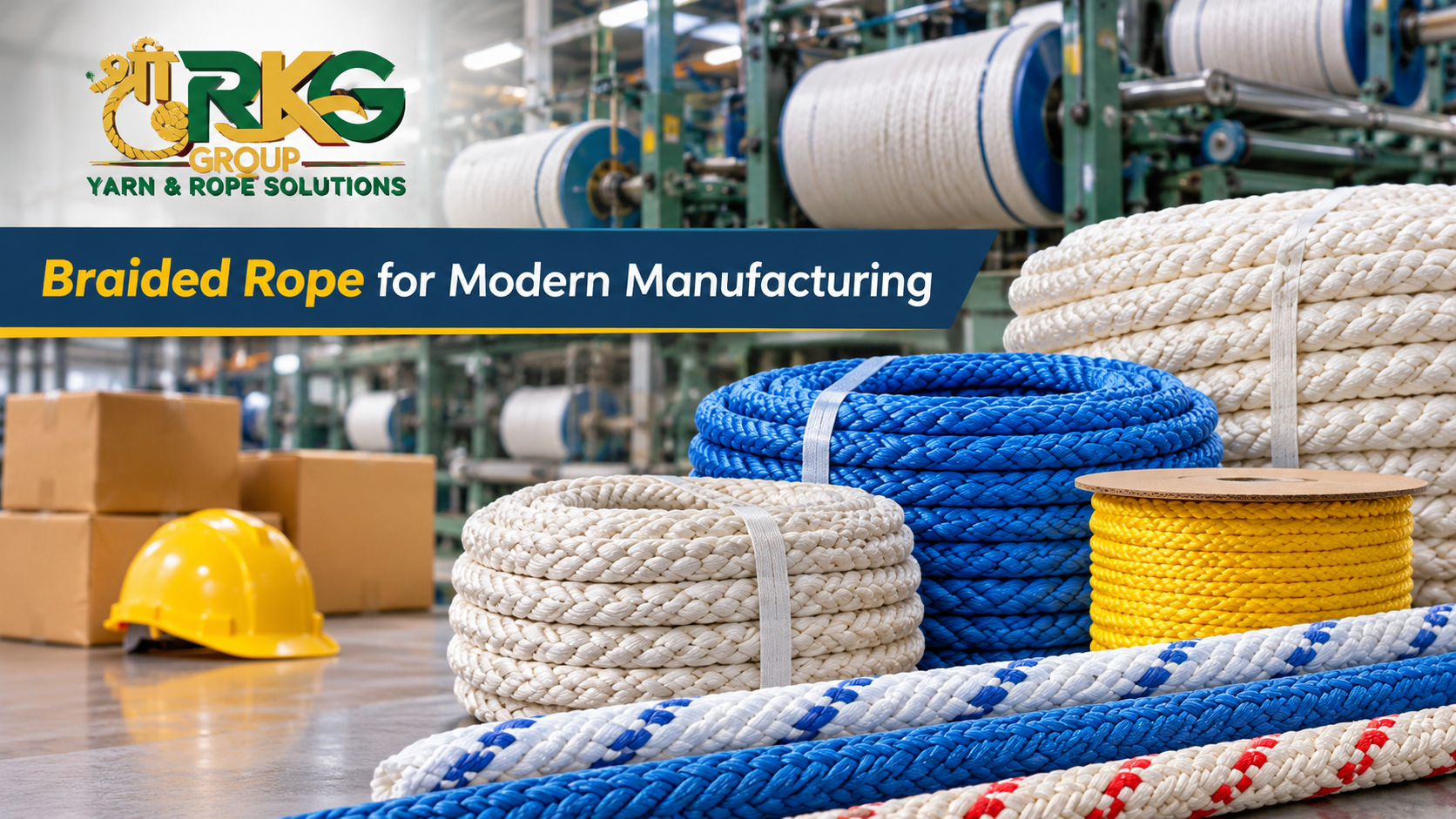
Braided rope plays an important role in modern manufacturing and commercial industries. From textile production and packaging to handicrafts, agriculture, and general industrial applications, braided rope is used in products and processes where flexibility, appearance, and material quality matter.
Although rope is often considered a basic utility material, its construction and material can influence the functionality and appearance of the final product. Manufacturers need to consider factors such as fibre type, rope diameter, flexibility, surface finish, and intended application before selecting the right braided rope.
For businesses, choosing the right rope is not simply about selecting a particular thickness or colour. The material and construction must match the requirements of the product and its manufacturing process.
This is why businesses often look for experienced braided rope manufacturers in India who can provide suitable rope specifications for different industrial and commercial requirements.
RKG Industries manufactures cotton and polyester braided ropes in various sizes, catering to industrial, commercial, packaging, textile, agricultural, and general-purpose applications.
Why Is Braided Rope Important in Manufacturing?
Manufacturing involves several components that contribute to the quality and performance of the final product. While machinery and primary raw materials receive significant attention, supporting materials such as braided rope can also influence product functionality, appearance, and handling.
Braided rope is manufactured by interlacing multiple threads or fibres in a structured pattern to create a uniform rope construction. Unlike twisted rope, which is formed by twisting strands together, braided rope uses an interwoven structure.
Depending on the material and manufacturing technique, braided rope can offer a smooth appearance, consistent construction, and suitable flexibility for different applications.
These characteristics make braided rope useful in manufacturing processes where the rope becomes part of the finished product rather than serving only as a binding material.
For example, textile manufacturers may prefer soft and flexible cotton braided rope for decorative and finishing applications. Packaging businesses, on the other hand, may require polyester braided rope depending on their handling, durability, and presentation requirements.
Selecting the right material and specifications helps manufacturers achieve better suitability for their intended applications.
How Braided Rope Influences Finished Product Design
Product design involves more than appearance. Manufacturers must also consider how different materials fit into the production process and how customers will use the finished product.
Braided rope can contribute to product design in several ways.
1. Flexibility for Different Product Shapes
Different products require different levels of flexibility. Rope used in decorative products may need to bend easily while maintaining its appearance. In packaging applications, it should be convenient to handle and suitable for tying or bundling.
Braided rope is available in different materials, diameters, and constructions, allowing manufacturers to select suitable options according to their product requirements.
2. Consistent Appearance and Finish
The appearance of rope can influence the overall presentation of a finished product. This is particularly important in textile manufacturing, handicrafts, gift packaging, and decorative products.
Well-manufactured braided rope provides a uniform, interwoven appearance that can enhance the overall finish of a product.
Material selection and colour requirements also play an important role when the rope remains visible in the final design.
3. Better Integration into Manufacturing Processes
When braided rope is used regularly in manufacturing, consistency becomes important.
Variations in diameter, texture, or surface finish may create difficulties during cutting, sewing, assembly, packaging, or other production activities.
Choosing appropriate rope specifications before production begins can help businesses maintain consistency and improve the organization of their manufacturing processes.
Cotton vs. Polyester Braided Rope: Understanding the Difference
The material used to manufacture braided rope affects its appearance, feel, handling characteristics, and suitability for different applications.
Cotton and polyester are two commonly used materials for braided rope manufacturing. Both have different characteristics, making them suitable for different product requirements.
| Comparison Factor | Cotton Braided Rope | Polyester Braided Rope |
| Material | Natural fibre | Synthetic fibre |
| Feel | Generally soft | Smooth synthetic feel |
| Appearance | Natural and traditional | Uniform synthetic finish |
| Flexibility | Suitable for various flexible applications | Depends on construction and specifications |
| Moisture absorption | Absorbs moisture | Low moisture absorption |
| Common applications | Textiles, handicrafts, décor and packaging | Commercial, industrial, packaging and general-purpose applications |
| Selection priority | Natural feel and appearance | Synthetic material characteristics and application requirements |
The right choice depends on the intended application, working conditions, and required rope specifications.
Manufacturers should evaluate these factors before selecting cotton or polyester braided rope for their production requirements.
Major Industrial and Commercial Applications of Braided Rope
Braided rope is used across different industries because of its varied material options, sizes, and construction characteristics.
Its suitability depends on factors such as fibre type, diameter, construction quality, and intended application.
1. Textile and Handicraft Manufacturing
Braided rope is used in textile and handicraft production for decorative products, handmade items, and other textile-based applications.
Its interwoven appearance and available material options make it useful for products that require a visible rope component.
Cotton braided rope can be considered for applications where a natural appearance and soft texture are preferred.
2. Packaging and Product Presentation
Packaging businesses use different types of rope for bundling, tying, and product presentation.
Depending on the packaging design, braided rope can serve both functional and decorative purposes.
The appropriate rope diameter, material, and colour can help businesses achieve the desired appearance and handling characteristics.
3. Agricultural and General Commercial Applications
Agricultural and commercial businesses may use braided rope for general bundling, organizing goods, and routine handling activities.
The choice of material and rope size depends on the type of goods, working environment, and intended purpose.
4. Construction and General Industrial Applications
Braided rope may also be used for certain general-purpose construction and industrial activities where its material and specifications are suitable.
However, lifting, fall protection, suspended loads, and other safety-critical applications require appropriately certified equipment with verified load ratings and application-specific performance specifications.
Ordinary braided rope should not be assumed suitable for these activities without proper testing and certification.
Factors to Consider When Selecting Braided Rope for Manufacturing
Selecting the right braided rope requires more consideration than simply choosing a product based on its appearance or diameter.
Businesses should evaluate several factors before placing an order.
1. Material Requirements
Determine whether cotton or polyester is more suitable for your intended application. Consider the required feel, appearance, moisture exposure, and working conditions.
2. Rope Diameter
Select a diameter that matches the product design, equipment requirements, and intended use.
Braided rope is available in different sizes, and choosing the appropriate diameter can help achieve the required functionality.
3. Construction Quality
Check the consistency of the braided structure, surface finish, and overall manufacturing quality.
Consistent construction is particularly important for businesses using rope regularly in their production processes.
4. Surface Finish
Consider the texture, appearance, and handling characteristics required for the finished product.
A suitable surface finish can be important in textile, decorative, packaging, and commercial applications.
5. Colour Requirements
If the rope remains visible in the finished product, colour selection becomes an important consideration.
Discuss colour and finishing requirements with the manufacturer before production.
6. Order Quantity and Batch Consistency
Businesses with recurring or bulk requirements should discuss production capacity, availability, and consistency between batches.
This helps manufacturers plan their procurement and maintain continuity in production.
7. Application Requirements
Clearly explain how the rope will be used. Providing details about the application helps the manufacturer understand the actual requirement instead of recommending a product based only on its diameter.
Sharing these specifications during the initial inquiry can make product selection easier and more efficient.
Why Choose RKG Industries for Braided Rope Manufacturing?
Different businesses have different requirements when it comes to rope material, dimensions, and applications. Understanding these requirements is important when selecting a suitable manufacturing partner.
With over 25 years of manufacturing experience, RKG Industries manufactures cotton and polyester braided ropes in sizes ranging from 1 mm to 24 mm.
The company’s braided rope range caters to various industrial, commercial, packaging, agricultural, construction-related, textile, and general-purpose applications.
RKG Industries focuses on understanding customer requirements, including:
- Cotton and polyester material preferences.
- Required rope diameter and dimensions.
- Application-specific requirements.
- Colour and surface finish preferences.
- Bulk and recurring order requirements.
By considering these factors, businesses can identify suitable braided rope options for their manufacturing and commercial needs.
Whether you require braided rope for textile production, packaging, handicrafts, or general industrial applications, RKG Industries offers different sizes and material options to explore.
Also Read – Jute Rope Manufacturers in India: Preventing Breakage, Loose Twisting and Quality Variation in Bulk Orders
Conclusion
Braided rope is more than a basic binding material. Its construction, material, flexibility, and appearance can influence how it performs and integrates into manufactured products.
From textile production and handicrafts to packaging, agriculture, and general industrial applications, braided rope serves a variety of commercial and manufacturing purposes.
Selecting the right rope begins with understanding the intended application. Cotton and polyester offer different material characteristics, while diameter, construction, and surface finish determine their suitability for specific requirements.
Working with an experienced manufacturer can help businesses identify appropriate rope specifications, particularly when they have recurring or bulk requirements.
With over 25 years of manufacturing experience, RKG Industries offers cotton and polyester braided ropes in sizes ranging from 1 mm to 24 mm.
If your business is looking for suitable braided rope for manufacturing, packaging, textile, or commercial applications, explore the braided rope range by RKG Industries and contact the team to discuss your requirements.
Frequently Asked Questions (FAQs)
1. What is braided rope used for in manufacturing?
Braided rope is used in textile production, handicrafts, packaging, agriculture, construction-related activities, and general commercial applications. Its suitability depends on the material, diameter, construction, and intended use.
2. What is the difference between braided rope and twisted rope?
Braided rope is manufactured by interlacing multiple strands or fibres to create a woven structure. Twisted rope is made by twisting strands together. Their construction, appearance, flexibility, and handling characteristics can differ.
3. Which is better for manufacturing: cotton or polyester braided rope?
The choice depends on the intended application. Cotton braided rope is often preferred where a natural feel and appearance are important, while polyester braided rope is suitable for applications requiring synthetic material characteristics and low moisture absorption. The final selection should consider working conditions and product specifications.
4. What sizes of braided rope are available at RKG Industries?
RKG Industries manufactures braided ropes in sizes ranging from 1 mm to 24 mm. The appropriate size depends on the material and specific application requirements.
5. How can I choose the right braided rope for my business?
Start by identifying the intended application, preferred material, required diameter, quantity, colour, and surface finish. Sharing these details with the manufacturer can help you identify a suitable rope specification for your business requirements.