 info@rkgindustries.com
 +91-7419008652, +91-9355108652
A cotton webbing tape that works perfectly for a lightweight tote bag may not be the right choice for a structured bag handle, a textile accessory or a belt-style product. Even when two tapes look similar, differences in width, thickness, weave and finishing can affect how they feel, fit and perform in the finished product.
For bag manufacturers, garment businesses and textile product brands, choosing the right cotton webbing tape is not just about appearance. It is about matching the tape to the product design, stitching process, expected use and quality requirements.
If you are sourcing cotton webbing tape in bulk, here is what to specify before requesting a quotation.
1. Start With the Product, Not Just the Tape Width
The first step is to define where the tape will be used.
- Bags and tote bags: The tape may be used for handles, shoulder straps, edging or decorative detailing. Width, comfort and stitching compatibility matter.
- Belts and textile accessories: The required stiffness, surface texture, thickness and appearance depend on the product design and how the tape will be fastened.
- Garments and textile products: Consistent width, a suitable finish and compatibility with the sewing process can help achieve a clean final appearance.
- Promotional and reusable bags: Colour consistency, repeat-order availability and cost per finished unit may be important purchasing considerations.
The same cotton webbing tape specification will not suit every application. Define the product’s purpose before selecting a size.
2. Choose the Correct Width for Your Design
Width is one of the first specifications to confirm when buying cotton webbing tape from a manufacturer.
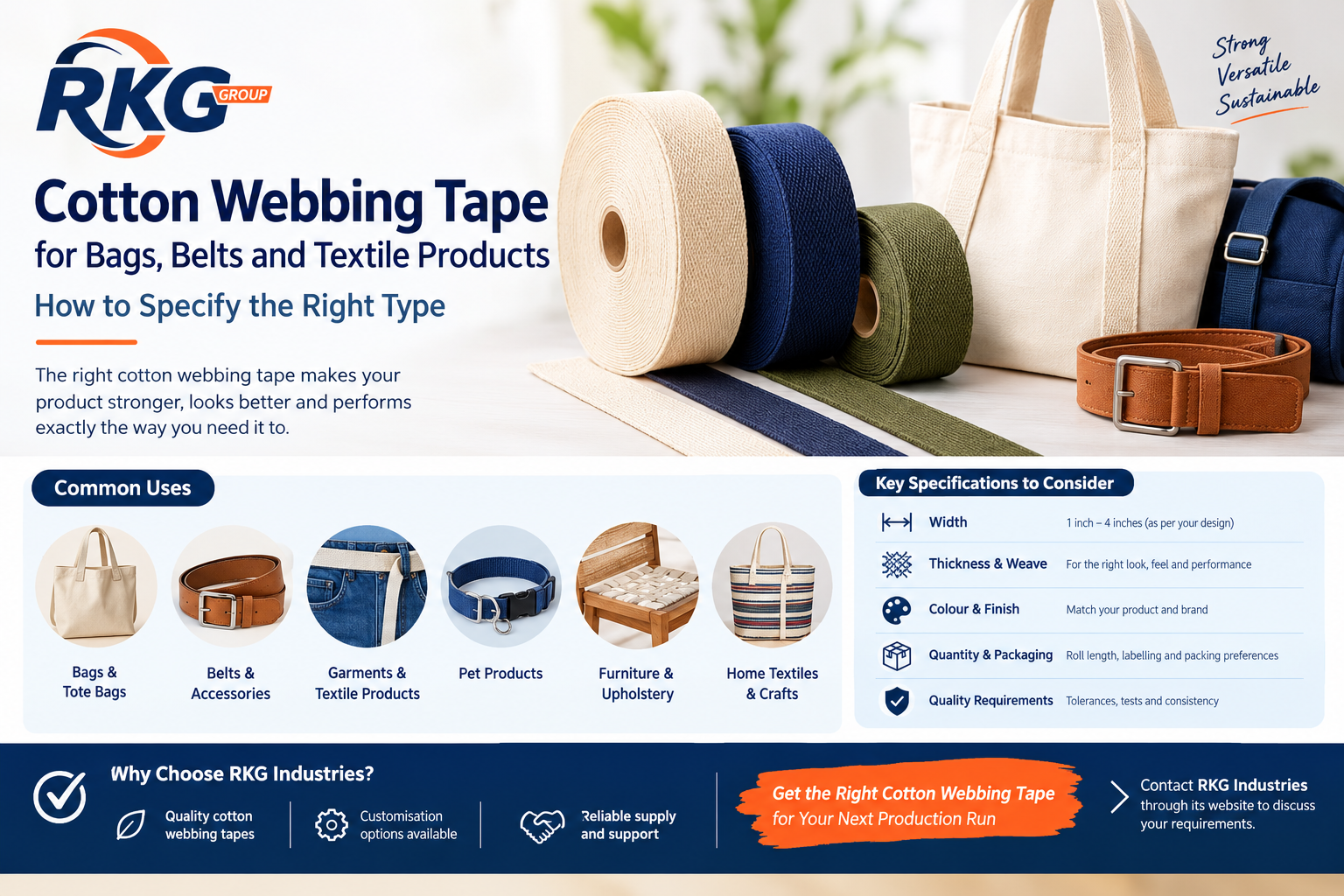
RKG Industries lists cotton webbing tapes in widths ranging from 1 inch to 4 inches. The appropriate option depends on the intended application and the manufacturer’s available specifications.
A narrow tape may suit decorative details or smaller textile products, while wider tape may be considered for bag handles and other applications where the design requires a broader surface.
Before finalising the width, check:
- The width required by your product design.
- The dimensions of buckles, loops and other fittings.
- Whether the tape must fold, overlap or pass through stitching guides.
- The finished appearance after sewing and assembly.
Practical tip: Test the tape on an actual product sample. A width that looks correct when laid flat may behave differently once folded, stitched or attached to a handle.
3. Check Thickness, Weave and Flexibility Together
Width alone does not determine whether webbing tape is suitable.
Thickness affects how the tape fits into seams and fittings. Weave construction influences surface appearance and handling. Flexibility determines how easily the tape bends around corners, folds or conforms to the product.
For example, a bag handle may need to feel comfortable in the hand while maintaining its intended shape. A tape used in a decorative textile application may place greater emphasis on appearance and ease of stitching.
When evaluating samples, examine:
- Whether the tape has a consistent width and thickness.
- Whether the edges look even and well-finished.
- How easily it folds or bends.
- Whether it can be stitched cleanly using your production setup.
- Whether the surface and texture match the approved design.
If the product will carry weight, do not assume that cotton webbing tape is load-rated. Confirm its suitability and any required strength testing with the manufacturer.
4. Confirm Colour and Finishing Before Bulk Production
Colour differences between sample approval and bulk supply can create problems for brands producing coordinated bags, accessories or textile collections.
Before placing a larger order, agree on the required colour, finish and acceptable variation. If colour matching is important, provide a physical reference or an approved sample rather than relying solely on a verbal description.
Also discuss whether the tape will be dyed, finished or processed further during your own manufacturing operations. These steps can influence the final appearance and should be considered when approving the material.
For repeat orders, retain the approved sample and written specifications. This provides a clearer reference for future production batches.
5. Give Your Supplier a Complete Specification
A quotation is only useful when the supplier understands exactly what you need. Requesting “cotton tape for bags” leaves several important details unanswered.
Use this checklist when contacting a cotton webbing tape manufacturer in India:
| Specification | Information to provide |
| Material | Cotton webbing tape |
| Width | Required size in inches |
| Thickness | Required measurement or approved sample |
| Application | Bag handles, belts, garments or another product |
| Colour | Required shade or reference sample |
| Finish | Natural, dyed or another agreed finish |
| Quantity | Total metres, rolls or other agreed unit |
| Packaging | Roll length, labelling and packing preferences |
| Quality requirements | Agreed tolerances and applicable test requirements |
Also confirm minimum order quantity, production lead time, delivery terms and whether the same specification can be supplied for future orders.
This information helps manufacturers assess your requirement more accurately and makes quotations easier to compare.
6. Why Bulk Buyers Should Approve a Sample First
A sample lets you evaluate the tape in the context of your actual product rather than judging it from a photograph or description.
For bag manufacturers, this means checking the handle construction, stitching and overall finish. For textile businesses, it means confirming the tape’s appearance, flexibility and compatibility with the manufacturing process.
Once approved, record the important specifications and use the sample as a reference for bulk production. If a particular strength, colourfastness or dimensional tolerance is essential, agree on the appropriate testing method and acceptance criteria before the order begins.
This approach helps reduce avoidable mismatches between the material ordered and the product you intend to manufacture.
Why Consider RKG Industries for Cotton Webbing Tape?
RKG Industries manufactures yarn, ropes and textile products, including cotton webbing tapes listed in widths from 1 inch to 4 inches. The company also offers customized manufacturing according to customer requirements.
Businesses planning a new product or regular bulk procurement can discuss the intended application, required width, quantity, colour and other specifications before confirming an order.
Explore the RKG Industries website to learn more about its product range.
Frequently Asked Questions
1. What is cotton webbing tape used for?
Cotton webbing tape can be used in bag handles, tote bags, textile accessories, garments, craft products and other applications where its properties suit the design.
2. What widths of cotton webbing tape does RKG Industries offer?
RKG Industries lists cotton webbing tape in widths ranging from 1 inch to 4 inches. Confirm the availability of your required specification directly with the manufacturer.
3. How do I choose cotton webbing tape for bag handles?
Consider the handle width, required thickness, comfort, stitching method, fittings and intended use. Test a sample in the finished handle design and verify strength requirements where relevant.
4. Can I order cotton webbing tape in bulk?
Bulk requirements can be discussed with the manufacturer. Share the desired width, quantity, application, colour and packaging requirements to establish availability and lead time.
5. What should I check before approving a cotton webbing tape sample?
Check width, thickness, weave, flexibility, colour, edge finish and stitching compatibility. If the application requires specific performance, confirm the relevant tests and acceptance criteria before bulk production.
Specify the Right Tape Before Your Next Production Run
The right cotton webbing tape starts with a clear understanding of your product. Define the width, finish, application and quality requirements, then approve a sample before committing to bulk production.
Looking for cotton webbing tape for bags, belts or textile products? Contact RKG Industries through its website to discuss your requirements.
Product availability, customisation options and technical specifications should be confirmed with the manufacturer before ordering.